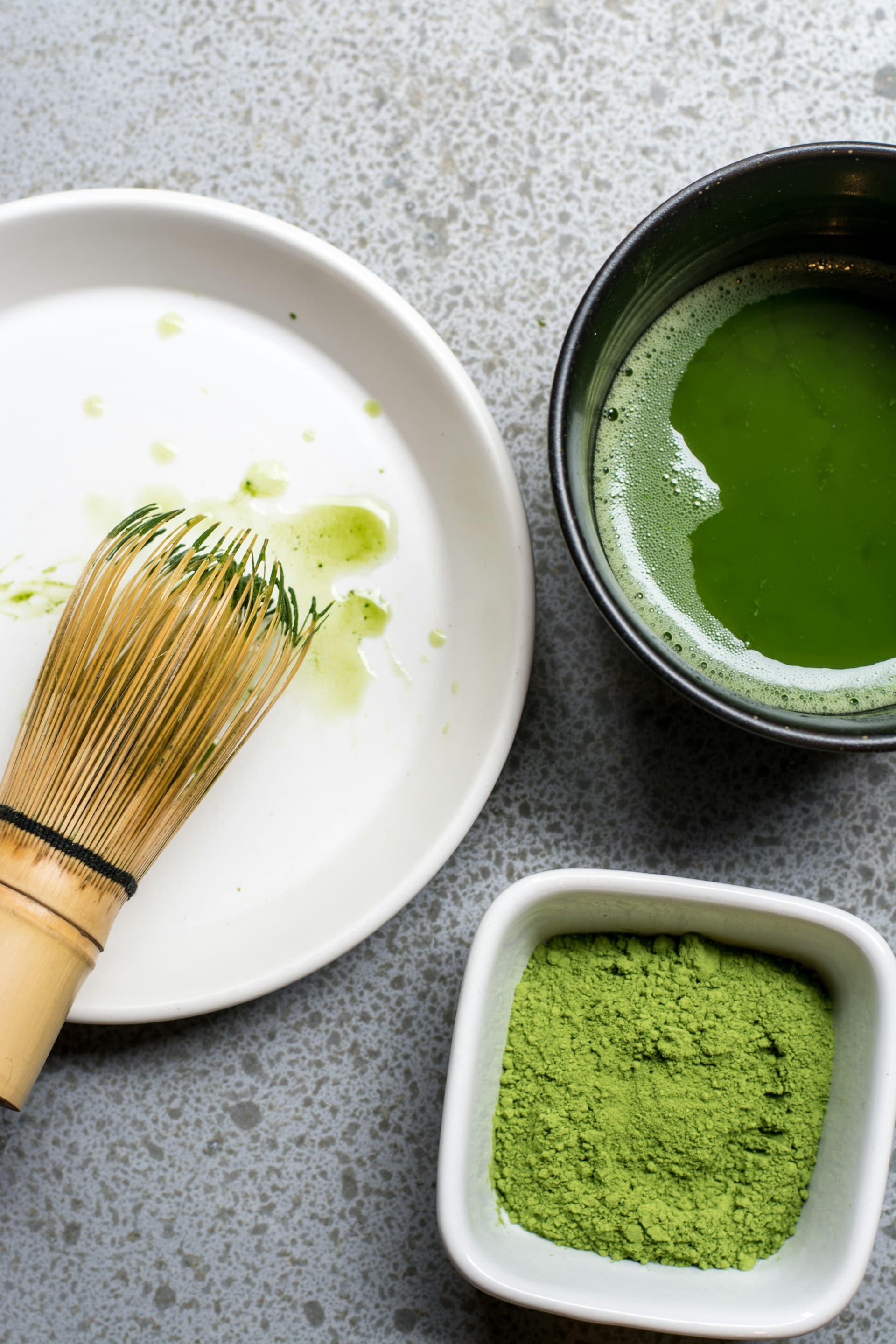
 Photo by Alice Pasqual on Unsplash
Kyoto Matcha 101: Everything You Need to Know
Essential knowledge for enjoying matcha in Kyoto — Uji's tea heritage and four notable tea houses.
Matcha in Kyoto: a starting guide
Matcha is finely powdered green tea, ground from shaded leaves on a stone mill. In Kyoto, it is hard to miss — shop windows display matcha parfaits, cafés serve matcha lattes, and tearooms set out a small bowl of matcha alongside a piece of wagashi (traditional Japanese sweets). The town of Uji, just south of Kyoto City, is widely cited in publicly available sources as one of Japan's principal matcha-producing regions; many of the city's tearooms source their matcha from Uji-rooted merchants.
This article is for first-time matcha drinkers — a short orientation followed by four tearooms, each pointing to a different way to enjoy it.
What matcha is
Matcha is shade-grown green tea. The leaves are steamed, dried into tencha (the unground precursor leaf), and then ground into fine powder on a stone mill. Unlike sencha or gyokuro — both brewed and then strained off the leaf — matcha is whisked into the cup and consumed in full. The result reads brighter green and denser in flavor, carrying the umami and slight bitterness held in the powder itself.
Why Uji
Per publicly available information, Uji — the area just south of Kyoto City — has long been known as one of Japan's principal tea-producing regions. Many Kyoto tearooms identify their matcha as Uji matcha, sourced from Uji-rooted tea houses. Travelers will see those names on signboards and printed menus across the city.
Three ways to drink it
- Whisked plain — matcha and hot water in a bowl, prepared with a bamboo whisk (chasen)
- Paired with wagashi — a small bowl of matcha served alongside a Japanese sweet
- As an ingredient — folded into parfaits, ice cream, shaved ice, and other modern desserts
There is no single correct entry point. The four tearooms below each lean toward a different style.
Gion — matcha as a parfait ingredient
Saryo Tsujiri Gion Honten is operated by Gion Tsujiri. Per the official website, its menu centers on matcha parfaits — layering matcha jelly, matcha ice cream, shiratama (small rice-flour dumplings), and azuki (sweet red bean paste) — alongside matcha shaved ice and an Uji-matcha float. A useful first stop for visitors curious about how far matcha can stretch as a dessert ingredient. The shop sits on the south side of Gion-machi along Shijo-dori.
Gion — a sit-down tearoom from an Uji name
Itohkyuemon Gion Shijo is the Gion branch of Itohkyuemon, an Uji-based tea house. Per the official information, the menu features the Tokusen Gion Parfait, an Uji-matcha curry udon, and seasonal parfait variations, all built around Uji matcha. Per official materials, the store opened in August 2019; it sits about a one-minute walk from Exit 6 of Gion-Shijo Station.
Demachi — matcha paired with Kyoto sweets
Sabou Isehan, near Demachiyanagi Station, is a neighborhood saryō (tearoom). Per the official website, the signature items are anmitsu (a chilled bowl of agar jelly, sweet beans, and fruit) and parfaits. The official information notes that the matcha is sourced from a Kyoto tea purveyor, the coffee from Ogawa Coffee, and the ice cream is made in-house. An approachable entry into the "paired with sweets" style; it sits where the Kamo and Takano rivers meet.
Shimogamo — matcha and wagashi in a tatami room
Saryo Housen sits in Shimogamo Nishi-takagi-cho. Per the official website, the operating company Housendo was founded in 1947 as an azuki confectioner, and Saryo Housen opened in 2003 as its tearoom arm. Guests are seated in a tatami room surrounding a Japanese garden. The menu features warabi mochi (a soft bracken-starch sweet, prepared after each order) and zenzai, a warm sweet soup made with Tanba dainagon azuki — a quiet setting for tasting matcha beside wagashi.
Before you visit
The way matcha reads on the palate shifts with how it is whisked, the temperature, and what it is paired with. A useful approach for first-timers: start with matcha as an ingredient — a parfait or a piece of warabi mochi alongside a bowl of matcha — and return another day for a whisked bowl in a quieter room. Kyoto holds enough tearooms across its districts to spread the visits across several stops.
Hours and closing days shift by season; check each shop's official site or its Google Maps listing before going.