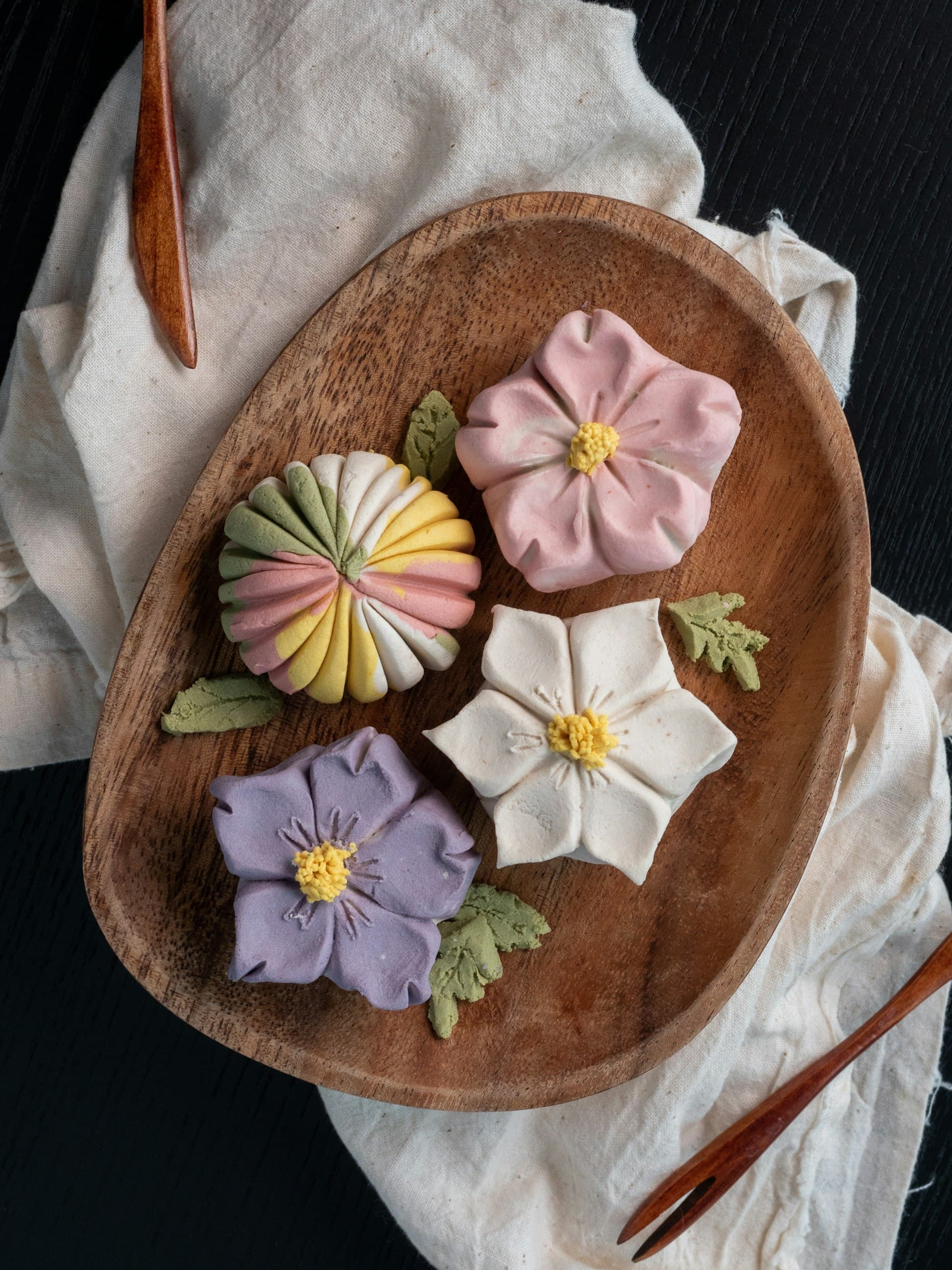
 Photo by Vicky Ng on Unsplash
Sweets of the Seasons: Wagashi Through the Year in Kyoto
From sakura mochi in spring to hanabira mochi in winter — Kyoto's seasonal wagashi.
Kyoto's wagashi calendar
Wagashi — Japanese traditional confections — are built around the seasons. In Kyoto, where wagashi developed alongside the tea ceremony, the year is mapped onto a calendar of shapes, ingredients, and colors: cherry petals in spring, cooling jellies in summer, full-moon dumplings in autumn, plum and bean cakes in winter. This piece sketches that calendar, then visits three shops across the city that each draw on it in a different way.
A year of seasonal wagashi
The motifs below are common across Kyoto's wagashi shops, observed widely as part of the city's confection year:
- Spring — sakura mochi (a rice cake wrapped in a pickled cherry leaf), hikichigiri, and waka-ayu (a small sweet-fish-shaped cake bridging spring into early summer)
- Summer — minazuki (a triangular sweet served on June 30th to mark Nagoshi no Harae, a midsummer purification rite), kuzukiri (cool kudzu-starch noodles)
- Autumn — tsukimi dango (dumplings offered for the harvest moon), kuri kinton (chestnut sweets)
- Winter — hanabira mochi (a white gyūhi rice cake folded over miso bean paste, served at the New Year's first tea ceremony, hatsugama), tsubaki mochi (camellia-leaf-wrapped rice cake)
These items follow the rhythm of shrine rites and tea-ceremony events more closely than the imported holiday calendar. Namagashi — the upper tier of fresh wagashi, served with matcha — can change in shape every month.
Walking sweets on the Sannenzaka approach (Kiyomizu)
Fujinami Sannenzaka Honten sits along Sannenzaka, the stone-stepped approach leading up to Kiyomizu-dera temple. According to the official website, it is a Kyō-dango specialist — a shop dedicated to Kyoto-style skewered rice-flour dumplings — offering mitarashi dango (glazed with a sweet soy sauce), matcha dango, and warabi mochi (a soft bracken-starch sweet). The official "about" page describes the shop as in business for more than thirty years, introducing its menu as part of Kyoto's traditional sweet making. The dango travel well in hand for a walking break on the approach.
A long-running Kyō-gashi house in Shichijo
Kanshundo Honten stands at the corner of Kawabata-dōri facing the Great Buddha Hall, near Sanjūsangendō temple in the Shichijo district. According to the official website, Kanshundo was founded in 1865 — the first year of the Keiō era — as a maker of kyō-gashi, the upper-tier Kyoto confections that grew up alongside the tea ceremony. The official company information states that the shop is now run in its sixth generation. The lineup centers on seasonal jōnamagashi — fresh wagashi changing month by month — and higashi, dry molded sweets. Per the official information, Kanshundo also runs a wagashi-making experience class at the main shop, opening the seasonal craft to visitors.
A confectionery in the Nishijin weaving district
Kyō-Nishijin Kasho Souzen is located in Nakainokuma-chō, at the intersection of Teranouchi-dōri and Jōfukuji-dōri in Nishijin, the historic weaving district of Kyoto. According to the official website, this main shop offers warabi mochi, jōgi-mono arare (a specialty form of arare, a baked rice-cracker sweet), everyday wagashi, baked sweets and baumkuchen. The official information frames the shop's work as a pursuit of genuine craft and flavor, with the aim of passing better culture on to later generations — joining classical confections such as jōgi-mono arare and contemporary baked goods under the same name.
Pairing the three
- A walking dango stop — Fujinami Sannenzaka Honten (Kiyomizu, Sannenzaka)
- A counter visit to a long-running Kyō-gashi house — Kanshundo Honten (Shichijo, Kawabata-dōri)
- A wagashi shop folded into a Nishijin walk — Kasho Souzen (Nishijin, Teranouchi-dōri)
Because the three shops sit across very different parts of the city, the most natural way to visit is one per destination day rather than all in one walk. Opening hours, closing days, and the seasonal lineup change through the year; check each shop's official information or its Google Maps listing for the latest details before you go.